If homes had a heartbeat, it would be the electrical panel. Tucked into a garage or a hallway closet, it decides which rooms wake up, which appliances behave, and whether your new EV charger plays nicely with the dryer. When a panel is undersized or outdated, even simple routines feel jittery. Lights flicker. Breakers trip. Extension cords multiply like ivy because there never seems to be a free outlet where you need one. The good news is that panel upgrades and safety inspections are straightforward, high-impact projects that bring a home into the present and keep it safe for the next decade or two.
I spend a lot of time in front of panels and behind them as well. Most days, the story is the same: the house has slowly outgrown its original electrical skeleton. The fridge is bigger, the HVAC runs longer, someone installed a tankless water heater, and the family added a few circuits for smart home devices. An honest inspection, followed by a smart upgrade, restores order and adds headroom for what’s next.
What your panel is really doing
Think of the main service panel as a switchyard. Power arrives from the utility, flows through the main breaker, then splits into branch circuits that feed outlets, lighting, appliances, and the heavy hitters like HVAC or an EV charger. A typical mid-century house originally ran fine on a 60 or 100-amp panel. That worked when a television weighed 60 pounds and every meal started on a gas stove. The average modern home is a different animal. Between heat pumps, induction cooktops, hot tubs, servers for home offices, and EV Charger Installations, 200 amps is the new practical baseline. Some properties, especially larger ones or those with big electric heating loads, benefit from 225 to 320 amps.
Inside the panel, breakers protect individual circuits from overloads and short circuits. When a breaker trips, it is a message. Maybe a space heater and a blow dryer ended up on the same 15-amp line. Maybe the breaker is tired, or the wiring has a loose connection. Treat the message seriously. Repeated trips are not a personality quirk, they are a symptom.
When a panel upgrade stops being optional
Upgrading a panel is one of those investments https://tdrelectric.ca/safe-commercial-electrical-vault-cleaning/ that can feel like buying new tires. It is not glamorous, nobody comes over to admire it, and yet every drive feels better once it is done. In practice, there are clear signs that your panel is overdue.
Steam showers and saunas are exemplary stress tests. Add an EV charger to a home with a 100-amp panel, and you will see the panel’s limits fast. If you keep juggling appliances to avoid trips, that is a baseline indicator. Heat buildup around the panel door or a faint smell of singed insulation is a stronger one. Watch for aluminum branch wiring from the 1960s and 70s, double-lugged neutrals, scorched bus bars, or breakers that do not reset with a crisp click. Federal Pacific and Zinsco panels crop up occasionally. Both brands earned reputations for breakers that fail to trip under fault conditions. If one of those names is embossed on your door, the fix is replacement, not optimism.
Sometimes the driver is opportunity rather than risk. Solar Panel Installation works better with a modern panel that has space and a bus bar rated properly for backfed breakers. Same goes for Home Generator Installation and automatic transfer equipment. If you are planning Tenant Improvements in a duplex or carving a rental suite out of a basement, you will want clean separation of circuits. All roads lead to the panel.
How electricians size a new panel
Homeowners often expect a 200-amp panel as a reflex. That is fine for many homes, but good practice is to perform a load calculation instead of guessing. The method is not mystical. Start with square footage, then layer on fixed appliances, HVAC, water heating, and specialty loads. Code allows demand factors because you won’t run everything at once. In real life, your usage patterns matter. A family that cooks nightly on an induction range, runs a heat pump, and charges a vehicle every evening looks different from a couple that works away from home and drives a hybrid.
I typically build scenarios with room for growth. A 14 kW electric tankless water heater pushes the math in a hurry. An EVSE at 48 amps continuous requires a 60-amp breaker and a willing panel. A spa can eat another 40 to 60 amps. If you layer those loads on top of a 100-amp service, you will be living on the edge. The calculation may justify a 225-amp panel even if your service conductors still land at 200 amps, just to give you physical breaker space and bus rating.
For homes with multiple future projects, I have installed a main panel paired with a subpanel that feeds the garage or an accessory dwelling unit. Subpanels make circuit management calmer and reduce cable runs through finished spaces. When paired with proper Surge Protection Installation at the service, you protect both panels and everything downstream.
The anatomy of a proper upgrade
A clean panel upgrade looks simple when it is done, but there is choreography behind the scenes. Power must be cut at the meter. The working clearance needs to be present: 30 inches wide, 36 inches deep, 6.5 feet high. If the existing panel is in a closet full of coats, we move it or reconfigure the space. We label every circuit in the old panel, rebuild or replace the grounding and bonding system, and evaluate the service mast and meter base. If the service conductors are undersized or the meter base is ancient, the utility gets involved. Expect a short outage window coordinated with the inspector and the utility. Prework matters, because when the power is off, the clock runs fast.
There is a moment when the new panel goes live and everything falls quiet. No buzzing, no warmth around breakers, no loose neutrals sparking under load. I like to measure voltage drop under simulated load and check thermal signatures with an infrared camera. A good panel upgrade solves problems you did not realize you had.
Safety inspections that find the quiet failures
Safety inspections are not about finding a single smoking gun. They are about catching small mismatches before they stack into a bigger failure. I approach a Residential Electrician safety walkthrough like a doctor reading vital signs.
At the service, I check the main bonding jumper, grounding electrode conductors, and connections to ground rods and the metallic water service if present. I look for corrosion on lugs, water intrusion, and old cloth-sheathed cable that has gone brittle. In branch circuits, I focus on terminations. Most overheated connections started with a slightly loose screw on a receptacle or a backstabbed connection that moved under thermal cycling. I test GFCI and AFCI protection, inspect exterior receptacles for in-use covers, and verify bonding in kitchens, baths, garages, and laundry areas.
Outlets tell their own stories. A discolored faceplate or a warm dimmer switch suggests poor contact or an overloaded circuit. I have found bootleg grounds where a previous owner tied the neutral to the ground screw on a receptacle. That trick suppresses a tester’s red light yet leaves you with a dangerous and code-violating condition. In older homes, I meter for correct polarity and continuity instead of trusting a three-light tester.
A quick pass with a clamp meter under everyday loads reveals drift: that refrigerator circuit pulling 11 amps because the compressor is on its last legs, or the sump pump circuit that spikes hard on start, begging for a dedicated line. With smart thermostats and Smart Home Device Installation proliferating, low-voltage wiring also deserves a look. Thermostat adapters that steal power can cause short cycling on certain HVAC boards. A Smart Thermostat Installation is simple if you have a spare conductor, and messier if you do not.
Kitchens, bathrooms, and other danger zones
Water and electricity negotiate poorly. Kitchens and bathrooms have strict requirements for GFCI protection and, in many jurisdictions, AFCI coverage as well. Microwave over the range, dishwasher, disposal, and an induction cooktop will all draw differently, which is why we design circuits with realistic diversity but dedicated branches where it counts. When someone remodels a kitchen without considering the panel, you get daisy-chained countertop receptacles starving small appliances. The fix is a bit of drywall dust and a couple of new 20-amp circuits, neatly landed on a panel that has the spaces to accept them.
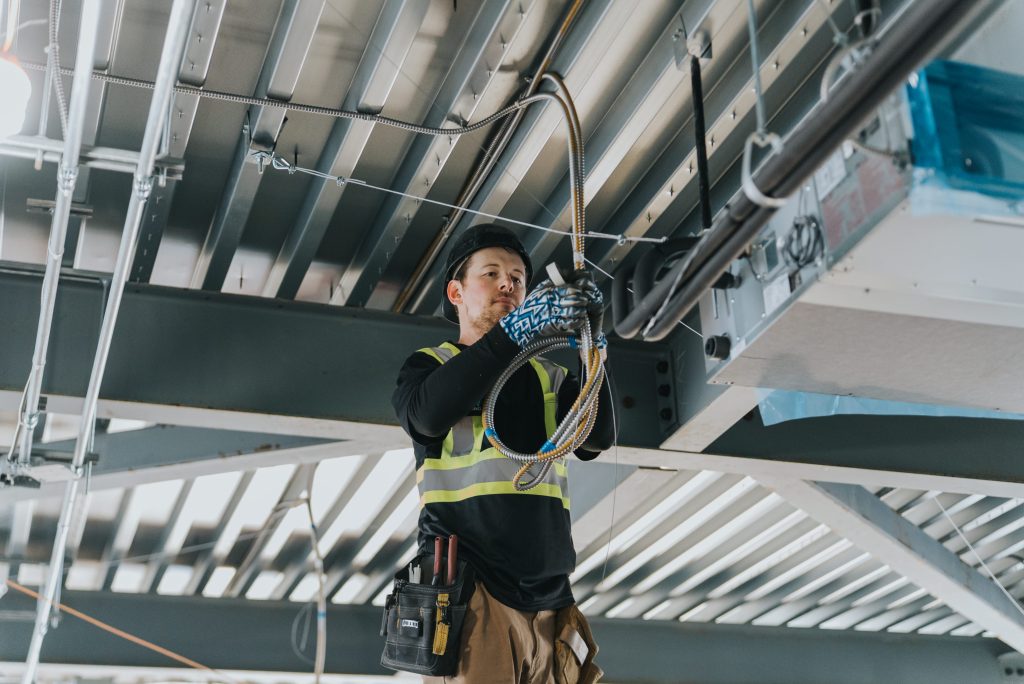
Exterior receptacles need GFCI protection with covers that allow cords to stay plugged in, and bonding must be correct at hot tubs and pools. I have seen backyard spas fed by repurposed extension cords buried in mulch. It works, right up until the day it doesn’t.
EV charging without the drama
EV charging has matured enough that we see predictable patterns. A 40- or 48-amp Level 2 charger is the sweet spot for most drivers. If you park in a detached garage, trenching and a subpanel can simplify future work. In homes that cannot easily accept a panel upgrade, a load management device can throttle the EVSE based on whole-home consumption, but it is a compromise. Night charging pairs well with time-of-use rates and Solar Panel Installation with battery storage, where you set the charger to feed when the sun is generous or the rates are low.
A good Residential Electrician will walk you through cord management, breaker sizing, and whether you want hardwired or plug-in equipment. I tag circuits dedicated to EV Charger Installations with labeling that anyone can understand at a glance. Less mystery equals fewer headaches during future maintenance.
Solar, storage, and backfeed realities
When you add rooftop solar, you are feeding power back into the system. Panels with space and bus capacity simplify the interconnection. The 120 percent rule on bus ratings matters. If you have a 200-amp bus, you can typically backfeed up to 40 amps at the opposite end of the bus from the main. If you need more, line-side taps or a service upgrade enter the conversation. Energy storage systems add their own rules, with transfer equipment and rapid shutdown. With the right layout, Solar Panel Installation doubles as a resiliency project when paired with a Home Generator Installation or battery, and the panel becomes mission control.
Surge protection is not optional equipment anymore
Surge events do not only come from the sky. Utilities switch loads, motors start and stop, and neighborhoods blink during storms. Modern electronics hate dirty power. Whole-home Surge Protection Installation at the service is inexpensive compared with the cost of a fried induction board or a dead heat pump inverter. I like layered protection: a Type 1 or Type 2 device at the main, supplemented by point-of-use protectors for sensitive electronics. Pair that with solid grounding and bonding, because surge devices need somewhere to dump energy.
Smoke detectors, carbon monoxide, and the quiet essentials
I still find battery-powered smoke detectors in hallways where hardwired, interconnected units were required two remodels ago. Hardwired Smoke Detector Installation with battery backup is straightforward in most houses. Add carbon monoxide detection outside sleeping areas when fuel-burning appliances are present or there is an attached garage. Smart detectors can be useful, but they are not a substitute for code-compliant placement and proper interconnection. If you cannot hear a single detector test tone from every bedroom with the doors closed, you have work to do.
Smart home wins that actually help
Smart Home Device Installation tends to sprawl. Some systems age like wine, others like milk. I focus on simple reliability. Smart Thermostat Installation is great when it does not compromise the HVAC control board. Smart switches are less fussy than smart bulbs in high-traffic areas. If you want voice control in a bathroom, pick hardware with appropriate ratings for damp locations. Keep critical systems like sump pumps and smoke detectors on proven hardware and dedicated circuits rather than folding them into an experimental ecosystem.
Commercial experience that pays off at home
Residential service work borrows plenty of good habits from the Commercial Electrician side. Clear labeling, neat wire management, and proper torque on lugs are not luxuries. In a commercial setting, Electrical Maintenance Services happen on schedules. Bring that mindset home and you catch small things: the loose bus screw, the thermostat wire the painter nicked, or the GFCI that trips under modest load because it was counterfeit to begin with.
There is also a place for specialized work you might not expect in a home context. Electrical Vault Cleaning is obviously commercial, targeted at utility and building service gear, but the principle translates: clean equipment runs cooler and lasts longer. In homes, I blow out panels gently, check for insect nests around exterior disconnects, and replace sun-baked in-use covers before they crack.
When trouble doesn’t wait until morning
Emergency Electrical Services exist because failures have bad timing. I have taken calls at 2 a.m. for water in a panel after a windstorm, and for a humming main breaker that would not trip yet would not reset. If a breaker feels hot to the touch or the panel smells metallic or smoky, power needs to be shut off and the equipment evaluated. Do not bypass a breaker with tape, a stick, or a prayer. That corner-cut approach is how kitchen fires and melted service conductors begin.
Real-world examples and the trade-offs behind them
A couple in a 1950s bungalow wanted an induction range, a heat pump, and an EV charger. Their home had a 100-amp panel that looked decent on the surface. The load calculation said they would be fine most days, but we scoped future upgrades and decided on a 200-amp service with a panel that had forty spaces. That choice added a day and a utility coordination call. Six months later they added a sauna without drama, because the headroom was already there.
Another case involved a rental suite carved out of a daylight basement. The owner wanted clean billing separation but could not run new utility service easily because of a steep driveway. We installed a main panel upgrade with a meter/main combo and a submeter solution for the tenant unit, plus dedicated circuits for the kitchenette and laundry. The surprise was an ancient splice hidden in a ceiling junction box feeding both floors. A simple safety inspection caught it before drywall went back. Edge cases like that are why a methodical approach beats assumptions.
What to expect from a professional visit
A quality Residential Electrician aims to leave you with fewer mysteries than you started with. The first trip should involve questions about your habits. Do you charge the car daily or twice a week, cook often, run space heaters in winter, or host frequent guests? Photos of your panel interior, the meter, and your main shutoff help planning. If an upgrade is in play, you should see a proposal that lists equipment brands, bus ratings, number of spaces, grounding improvements, and any utility coordination.
Reputation matters. Firms like TDR Electric, and others offering comprehensive Electrician Services, build their schedules around clear scopes and tidy workmanship. You are looking for technicians who torque lugs to spec, label circuits legibly, and provide documentation for permit and inspection. If you plan future projects like Tenant Improvements, Solar Panel Installation, or Smart Home Device Installation, ask for a panel layout that preserves space in logical blocks instead of scattering circuits randomly.
The inspection rhythm that keeps a home honest
Nothing in a house stays static. Seasons shift loads. Kids plug in a gaming PC with a power supply that could start a golf cart. Then the holidays arrive and the kitchen lives at full tilt. An annual electrical tune-up is usually enough for most homes, with a quicker check when you add a major appliance or finish a remodel. For older properties or homes with heavy electric heat, I suggest a semiannual glance at the panel and exterior equipment after weather extremes.
Here is a simple, homeowner-friendly routine that dovetails with professional care without replacing it:
- Test GFCI and AFCI devices, check smoke and carbon monoxide detectors, and look for warm or discolored outlets during normal use. Walk exterior circuits after storms, verify that in-use covers close properly, and listen for buzzing at disconnects or the main panel.
Those five minutes often point to issues worth a deeper look. If something seems off, do not guess. Call a professional who does Electrical Maintenance Services, not a handyman with a test pen.
When an upgrade is the cheapest way to save money
A tired panel increases hidden costs. Nuisance trips break appliances over time. Voltage sag makes motors work harder and shortens compressor life. Flicker may indicate a service drop issue the utility should fix, but you only know that once the panel is right and tight. Between wasted energy, repair bills, and lost food or wine from failed refrigerators and freezers, the math for a clean upgrade often pencils out faster than expected.
Add in the projects that suddenly become easy. Installing an EV charger is simple when your panel welcomes it. Home Generator Installation ties in neatly with room for a transfer switch or interlock. Surge Protection Installation becomes part of a coherent plan instead of an afterthought that barely fits. When you reach this point, even Emergency Electrical Services become rare, because the system stops surprising you.
The human factor that keeps systems safe
I have yet to meet a homeowner who got excited about torque specs. That is fine. What matters is a posture of curiosity, not fear. Ask your electrician why a certain breaker style fits your panel, why copper pigtails were added to aluminum circuits, or why a multi-wire branch circuit needs a handle tie or a two-pole breaker. Good practitioners appreciate engaged homeowners.
There is a place for humor in all this. I have found extension cords that lived under rugs long enough to earn their own rent, and power strips daisy-chained like festival lights behind an entertainment center. Most of these stories end well once someone brings order to the chaos. The path forward is the same: assess, plan, and upgrade intelligently.
Final thoughts before you open that panel door
Electrical systems reward patience and punish shortcuts. If your panel is old, crowded, or just confusing, you can change that without turning the house upside down. Hire a Residential Electrician who treats labeling like a craft and who can handle everything from Smoke Detector Installation to EV Charger Installations under one roof. If you run a small business or manage properties, a Commercial Electrician with residential finesse can coordinate Tenant Improvements with the same discipline used in larger projects.
You will know the job was done right when silence returns. Breakers sit cool. Labels make sense. The fridge hums softly, the charger sips power overnight, and your smart thermostat negotiates with the heat pump without tripping anything. That is the quiet confidence of a home with a strong electrical backbone, ready for whatever you throw at it next.
Name: TDR Electric Inc.
Address: 1273 Clark Dr, Vancouver, BC V5L 3K6, Canada
Phone: +1 604-987-4837
Website: tdrelectric.ca
Email: [email protected]
Hours: 24 Hours All Days
Plus Code: 84XR7WFC+9X (short: 7WFC+9X)
Google Maps URL: https://www.google.com/maps/place/TDR+Electric+Inc./@49.273397,-123.0801556,17z/data=!3m1!4b1!4m6!3m5!1s0x5486704eeda05d95:0xf424cd92195e1778!8m2!3d49.273397!4d-123.0775807!16s%2Fg%2F11b7y791rn
Map Embed:
Socials:
https://www.facebook.com/TDRelectric/
https://www.instagram.com/tdrelectric/
https://www.linkedin.com/company/tdr-electric-inc/
https://www.youtube.com/@TDRElectricInc
TDR Electric Inc.
TDR Electric Inc. in Vancouver is a professional electrician serving Greater Vancouver.
Businesses choose TDR Electric Inc. for highly rated electrical work across the Lower Mainland.
TDR Electric Inc. provides commercial and residential services like service panel upgrades in Greater Vancouver.
Looking to book service? Call +1 604-987-4837 to book an electrician with a affordable team.
For service requests, email our team at [email protected] and a highly rated electrician will respond.
View TDR Electric Inc. at 1273 Clark Dr, Vancouver, BC V5L 3K6, Canada for a highly rated electrical partner.
Google Maps directions for TDR Electric Inc.: https://www.google.com/maps/place/TDR+Electric+Inc./@49.273397,-123.0775807,16z/data=!3m1!4b1!4m6!3m5!1s0x5486704eeda05d95:0xf424cd92195e1778!8m2!3d49.273397!4d-123.0775807!16s%2Fg%2F11b7y791rn!5m2!1e2!1e4
Popular Questions About TDR Electric Inc.
What services does TDR Electric Inc. offer in Vancouver?
TDR Electric Inc. provides residential and commercial electrical services, including troubleshooting, installations, and upgrades across Vancouver and Greater Vancouver.
Do you install EV chargers in Greater Vancouver?
Yes—TDR Electric Inc. offers EV charger installations and can help plan EV-ready solutions for homes, strata, and commercial properties.
Can you help with service panel upgrades and breaker issues?
Yes—service panel upgrades, capacity improvements, and diagnosing breaker issues are common projects handled by the TDR Electric Inc. team.
Do you provide commercial electrical work and tenant improvements?
Yes—TDR Electric Inc. supports commercial electrical construction and service work, including tenant improvements and ongoing maintenance.
How do I request a quote or schedule an electrician?
Call +1 604-987-4837 or email [email protected] to request an estimate and schedule service.
How can I contact TDR Electric Inc.?
Phone: +1 604-987-4837
Email: [email protected]
Website: tdrelectric.ca
Facebook: https://www.facebook.com/TDRelectric/
Instagram: https://www.instagram.com/tdrelectric/
LinkedIn: https://www.linkedin.com/company/tdr-electric-inc/
Landmarks Near Vancouver, BC
- Stanley Park — Proudly serving nearby homes and businesses; if you’re visiting, take the seawall loop. https://www.google.com/maps/search/?api=1&query=Stanley%20Park%2C%20Vancouver%2C%20BC | https://en.wikipedia.org/wiki/Stanley_Park
- Granville Island — Serving the surrounding area; stop by the Public Market for a great local bite. https://www.google.com/maps/search/?api=1&query=Granville%20Island%2C%20Vancouver%2C%20BC | https://en.wikipedia.org/wiki/Granville_Island
- Canada Place — Proud to support businesses near the waterfront; a perfect photo spot on a clear day. https://www.google.com/maps/search/?api=1&query=Canada%20Place%2C%20Vancouver%2C%20BC | https://en.wikipedia.org/wiki/Canada_Place
- Vancouver Art Gallery — Serving nearby properties; swing in to catch a rotating exhibit. https://www.google.com/maps/search/?api=1&query=Vancouver%20Art%20Gallery%2C%20Vancouver%2C%20BC | https://en.wikipedia.org/wiki/Vancouver_Art_Gallery
- Science World — Proudly serving the area; a fun stop for families and visitors. https://www.google.com/maps/search/?api=1&query=Science%20World%2C%20Vancouver%2C%20BC | https://en.wikipedia.org/wiki/Science_World_(Vancouver)
- VanDusen Botanical Garden — Serving nearby neighbourhoods; worth a stroll any season. https://www.google.com/maps/search/?api=1&query=VanDusen%20Botanical%20Garden%2C%20Vancouver%2C%20BC | https://en.wikipedia.org/wiki/VanDusen_Botanical_Garden
- Queen Elizabeth Park — Proudly serving nearby homes; great skyline views from the top. https://www.google.com/maps/search/?api=1&query=Queen%20Elizabeth%20Park%2C%20Vancouver%2C%20BC | https://en.wikipedia.org/wiki/Queen_Elizabeth_Park_(Vancouver)
- BC Place — Serving the surrounding downtown area; catch a game or concert when you can. https://www.google.com/maps/search/?api=1&query=BC%20Place%2C%20Vancouver%2C%20BC | https://en.wikipedia.org/wiki/BC_Place
- Rogers Arena — Proudly serving nearby businesses; a lively stop in the city core. https://www.google.com/maps/search/?api=1&query=Rogers%20Arena%2C%20Vancouver%2C%20BC | https://en.wikipedia.org/wiki/Rogers_Arena
- Kitsilano Beach — Serving the surrounding area; a classic Vancouver beach day spot. https://www.google.com/maps/search/?api=1&query=Kitsilano%20Beach%2C%20Vancouver%2C%20BC | https://en.wikipedia.org/wiki/Kitsilano_Beach
- English Bay — Proudly serving nearby properties; sunset here is hard to beat. https://www.google.com/maps/search/?api=1&query=English%20Bay%2C%20Vancouver%2C%20BC | https://en.wikipedia.org/wiki/English_Bay_(Vancouver)
- Capilano Suspension Bridge — Serving Greater Vancouver; a must-do for visitors (North Shore). https://www.google.com/maps/search/?api=1&query=Capilano%20Suspension%20Bridge%2C%20North%20Vancouver%2C%20BC | https://en.wikipedia.org/wiki/Capilano_Suspension_Bridge